Wednesday, February 24, 2010

Denmark: One Euro country where people support their Afghan mission

Further to this post,
Canada after Afstan: Demilitarization?
a story you'll not see in the Canadian media (note the chart at the end):
Denmark Rallies Public Behind Afghan War

Among allied forces fighting in Afghanistan, few countries have deployed a bigger share of their armed forces than Denmark, and fewer still have taken higher levels of casualties. But the small Scandinavian country is emerging as an unlikely example of how to maintain public support for the war.

The popularity of the international campaign in Afghanistan has fallen across Europe and in the U.S. On Tuesday, the Dutch government set a June 9 date for general elections, nearly one year ahead of schedule. The move followed the unraveling of Netherlands' coalition government last weekend after it failed win support to extend the mandate of the nation's 1,600 troops in Afghanistan, presaging a likely withdrawal this year.

U.S. Defense Secretary Robert Gates warned Tuesday that the NATO military alliance is facing "very serious, long-term, systemic problems" sparked by European nations' unwillingness to adequately fund their militaries [as for us, see "The CF's budget--and missions--after Afstan"]...

the Danes have largely maintained public support for the effort, selling the mission as a humanitarian effort rather than simply protection against a terrorist threat, and building consensus among political parties. They have reaped the benefits of a largely supportive media and the country has, to some degree, rediscovered its pride in an active military.

"The key to sustaining public support is an elite consensus that includes politicians in government and opposition as well as key opinion leaders: influential intellectuals, academics and columnists," says Dr. Peter Viggo Jakobsen, a security expert at the University of Copenhagen.

Denmark has paid a high price in Afghanistan. Its 750 troops represent almost 5% of its entire military, including reserves—among the highest in Afghanistan. Of the total, 31 Danish troops have died there, an allied casualty rate behind only Canada and Estonia, which has just 150 soldiers fighting.

Yet throughout a difficult 2009, polls consistently showed around a half of Danes surveyed by TNS Gallup believed Danish troops should be in Afghanistan; only one-third said they didn't. In NATO nations such as the U.K., Germany and Netherlands, meanwhile, polls reveal over half wanting troops back home.

"If you can't win the public opinion, you have lost the war," Danish Defense Minister Søren Gade said in a recent interview [QUITE--and our government has not really made much of an effort--when was the last time you saw Prime Minister Harper give a speech, or television interview, about Afstan?]...

Denmark's forces in Afghanistan—along with Britain, the Netherlands, Estonia [see "Estonians fighting in Afstan"] and Canada—have formed a rump [a sad yet very true word] of non-U.S. allies essential to the U.S.-led war effort that do battle in Helmand province and other Afghanistan hot spots, contributing to high casualty rates for these countries' contingents.

Now some of those nations are growing weary of the effort. The Netherlands and Canada have set pull-out dates, and some foreign armies remain reluctant to fight in restive regions like Helmand. British politicians face a hostile media that chronicles the return of every dead soldier's coffin.

It's a different story in Denmark. "On editorial pages, there has been a total agreement that it is a necessary war," says Kristian Mouritzen, the foreign editor of Berlingske Tidende, one of Denmark's big three dailies.Mr. Gade, a former Danish army officer, said a key to winning the public was giving reporters deep access to soldiers, who were allowed to talk.

When troops say, " 'We did a job and we did it good, and it is worth doing,' then it is very hard indeed for a lot of people to oppose, because those are the men and women who risk their lives," he said [that certainly is not the case in Canada: "We support the troops but not the mission", say many]...

[DANES]
Danish defence ministry's Afghan page is here. Earlier:
President Obama recognizes Danish military effort in Afstan
Update: Good point in a comment by Brasidas at Milnet.ca (should have noticed myself, applies to all the countries in the chart):
Can't say I like how that table seems to say that one in twenty Canadians sent there's a dead man. One figure's talking about the number of troops actively deployed, another's the total number of dead over the course of the mission, and a third divides the two. When the losses were over several rotations.
Babbling made the same point in an earlier post on another subject:
...If one takes the 139 fatalities suffered by the Canadian contingent in Afghanistan since 2002, and divides it by the roughly 2,800 currently deployed personnel in country, one comes up with a number just shy of 5%. But dividing a current number by a cumulative number is a nonsensical operation. A less innumerate exercise would be to divide the total number of fatal casualties (139) since 2002 by the total number of deployed personnel since 2002 (somewhere north of 25,000 by my rough estimate). Call it about one half of one percent. Epic fail on the high-school math...

Saturday, July 18, 2009

"Iraq-Afghanistan fatalities"

Serious research from BruceR at Flit; I think we've certainly been doing our bit:

Just a quick look again at the combined Iraq-Afghanistan fatalities (figures from icasualties.org):

Total fatal casualties, both theatres (change in the 33 months since I did this the last time):

1. United States: 5066 (+1922)
2. United Kingdom: 364 (+204)
3. Canada: 125 (+83)
4. Italy: 48 (+6)
5. Spain: 36 (+6)
6. Germany: 33 (+15)
7. Poland: 32 (+15)
8. Denmark: 31 (+22)
9. France: 28 (+19)
10. Netherlands: 21 (+16)

Interesting how in 33 months all we've seen is Ukraine drop off the list and Netherlands come up.

Fatalities per 1,000 active-duty military personnel:

1. US: 3.44
2. UK: 1.94
3. Canada: 1.90
4. Denmark: 1.35
5. Latvia: 1.09

Fatalities per million population:

1. US: 16.5
2. UK: 5.91
3. Denmark: 5.64
4. Estonia: 4.48
5. Canada: 3.71

Again, not much change from 3 years ago, with Bulgaria and El Salvador (both of which are not deployed in numbers in Afghanistan) dropping off the list and being replaced in the rankings by the 2 Baltic republics (with 6 fatalities each, but in much smaller militaries (about 5,500 regulars each) and populations).

I think Denmark's contribution to Afghanistan (24 fatalities) and Iraq (7), where they have taken casualties at a greater rate per population, on a population one-sixth the size of Canada's, have generally been under-recognized [emphasis added--quite, see 2) here].

Here's some more stuff, on NATO under- and over-contributions by country:

Positive value is number of soldiers currently being contributed to ISAF above the NATO mean contribution (currently 11.85 soldiers in Afghanistan per 1000 full-time troops). Negative is soldiers below that mean national contribution:

Overcontributors:

UK: +6072
Canada: +2049
Netherlands: +1141
Germany: +441
Denmark: +429
Norway: +158
Latvia: +100
Estonia: +84
Poland: +68
Croatia: +53
Lithuania: +40
Macedonia: +18
Belgium: +17

Undercontributors:

Turkey: -5373
Greece: -1952
Spain: -1329
Portugal: -432
Italy: -376
France: -289
Czech Rep: -247
Romania: -234
Bulgaria: -134
Albania: -97
Slovakia: -80
Hungary: -76
Slovenia: -37
Luxemburg: -2

Lastly, a measure relating to combat intensity for the non-US ISAF countries in the different regions of Afghanistan, judged by total fatalities due to hostile action, factoring in the size of the current contingent (only countries with more than 400 personnel on average over the last 2 years are listed).

1. Canada (South): 38.5 combat fatalities per 1000 troops currently deployed
2. Denmark (South): 32.2
3. UK (South): 20.9
4. Romania (South): 15.9
5. France (East): 11.3
6. Australia (South): 10.9
7. Norway (North): 8.7
8. Spain (West): 8.5
9. Netherlands (South): 8.1
10. Poland (East): 6.8
11. Germany (North): 5.9
12. Italy (West): 3.3
13. Turkey (East): 0.0

Note a high number on this index could indicate consistent hard fighting. It could also indicate a measure of bad luck. What it does manage to confirm, though, is that the risk is being unevenly spread.

To nutshell it, NATO's ISAF contribution is significantly hurt at present by both countries that are underrepresented in terms of numbers, and underrepresented in terms of casualties they're willing to risk. Spain and France are examples of the first condition, Germany and Poland the second, and countries like Turkey, Greece, Portugal and Italy are managing to fail the alliance both ways.

It's a great pity, when one thinks how much of a positive effect those missing 5,000-odd Turkish trrops would have had, particularly in an area like army mentoring [emphasis added].

Thursday, June 18, 2009

Afstan: Germans and Danes

1) Germans:
Germany increases troop numbers to Afghanistan

The German cabinet on Wednesday agreed to deploy up to 300 further German soldiers to Afghanistan. They will assist airborne surveillance as part of NATO's International Security Assistance Force (ISAF).


The German government said the mission would help "better coordinate" civilian and military air traffic. This would support the protection of the deployed soldiers and the Afghan civilian population.

Afghanistan's mountainous landscape hindered radar controls by ground troops, it said in a statement. Air traffic had also increased significantly in the past years.

"The reconnaissance aircraft were therefore urgently necessary to increase security," the statement said.

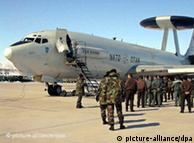
Germany will provide the troops for up to four Airborne Warning And Control System (AWACS) aircraft, whose home base is Geilenkirchen in western Germany. These will be sent when NATO begins its deployment of AWACS planes in Afghanistan. The aircraft will be stationed at the NATO base in Konya, Turkey.

The mandate is limited to December 13, 2009 [emphasis added]. The lower house of parliament still has to approve the mission and is expected to do so at the beginning of July.

NATO defense ministers approved the surveillance mission last Friday.

In total, Germany has about 3,500 troops in Afghanistan and there is a parliamentary mandate to send 4,500 as part of the NATO mission. But an additional mandate was required for the deployment of troops to assist the surveillance mission.

The AWACS planes will be unarmed. They can monitor a region of over 300,000 square kilometers from an elevation of 9,000 meters and can be refueled in the air.
It took the Germans almost a year to make the decision. See Update here for more on Germans.

2) Danes:
Danish troops die in Afghanistan

Three Danish soldiers have been killed in the southern Afghan province of Helmand, Denmark's military has said.

The soldiers were reported to have been leading a convoy when their vehicle was hit by a roadside bomb or mine.

Twenty-five Danish soldiers have died in Afghanistan since Denmark joined the US-led coalition in 2002.

Denmark has about 700 military personnel stationed in Afghanistan, mostly based in Helmand, a turbulent stronghold of Taliban militants.

Danish Foreign Minister Soren Gade told the country's TV2 news channel he had learnt of the soldiers' deaths "with great dismay".

The soldiers were taken by helicopter to the British Camp Bastion base but were declared dead on arrival...

From an earlier post:
...
By the way, the Danes, with very little notice (except inside NATO circles I guess), have been doing a bang-up job in Afstan; rather more than us on a per-capita basis--see end of this post:
Denmark 700 [emphasis added-- fully in combat--more at Update here]
Denmarks's population is one-fifth Canada's so 25 fatalities would equate to 150 Canadian deaths on a per capita basis. In fact we have suffered 142 so the sacrifice now seems roughly comparable. The Danes' 700 troops would equate to 3,500 Canadians; we have some 2,800.

Friday, May 18, 2007

Danes to double strength in Afstan/Three Germans killed

The fighting Vikings are showing real class. Wake up Canadian opposition parties and pundits (Jim Travers, this means you).
In remarks to Danish troops at Camp Bastion in Helmand province, [Prime Minister Anders Fogh] Rasmussen touched on the recent death of a Danish soldier injured in a firefight at the end of April.

The soldier was the fourth Danish soldier to have been killed in Afghanistan and in his remarks the premier said that while tragic, the deaths had some meaning, Danish news agency Ritzau reported.

Rasmussen highlighted elections held since the Taliban were driven from power and that "women have been given rights and opportunities that they did not have before."

The Danish premier Thursday visited a Danish-funded school for girls and said that the visit "convinced" him that Denmark's involvement was worthwhile...

The Danish government and the main opposition parties have...agreed to almost double the current 330-strong Danish contingent [emphasis added] in Afghanistan.

Earlier this week, parliament began formal proceedings to approve the increase of the Danish contingent.

Soldiers who have served in Afghanistan have also called for the defence ministry and military high command to deploy four or five tanks as a means of improving security...[Via Afghanistan Watch]
Video of Danes in action at the Update here (I appear to have been a bit premature about the tanks in this earlier post).

Update: Any bets that this will be reported in the Canadian media or noticed by our pundits? I haven't seen anything about the troop increase either; I guess these things just don't fit the script:
Denmark will not leave Afghanistan in the lurch, said Prime Minister Anders Fogh Rasmussen during a visit to that country, the Copenhagen Post reported.

He ensured the country that in addition to leaving troops in Afghanistan until the country is secure, Denmark will also continue to focus on humanitarian projects.

Rasmussen met with Afghan president Hamid Karzai in Kabul on Thursday to address the country's eroding security situation.

"Outside forces will be required in Afghanistan over what I would call an open time period," Rasmussen told Denmark's Jyllands-Posten newspaper...

In a few weeks the Danish parliament is expected to approve a plan to send 200 more soldiers to Afghanistan, raising the total number to 640. the parliament is also expected to vote to permit the military to send as many as 40 commandos if necessary.
Upperdate: Meanwhile the Germans are discovering that playing the nice guy does not exempt one from the Taliban's tender touch:
A suicide attacker detonated himself next to German soldiers shopping in a crowded market in northern Afghanistan on Saturday, killing eight people and wounding 16, officials said.

Three Germans were killed and two wounded in the attack, said Gen. Noor Mohammad Omarkhail, the deputy provincial police chief. Five civilians were killed and 13 wounded, including seven seriously, said Azizullah Safer, the director of the provincial health department. One translator working for the Germans was also wounded...

The provincial police chief, Gen. Ayub Salangi, said two German vehicles on a security patrol drove into the market area, where soldiers got out on foot to do some shopping.

"They were on a patrol, but they had gotten out of their vehicles with their translator to buy something in the market when the attack happened," he said...

Germany's 3,000 troops here are responsible for northern Afghanistan, which sees relatively few attacks and is considered a much safer region than southern or eastern Afghanistan, where most of the country's fighting takes place...
More (what a comparison with the Danish parliament):
[German defence minister Franz Josef] Jung said he ``can't rule out'' the possibility that the attack will spark a political debate within Germany's ruling coalition of Christian Democrats and Social Democrats over whether Germany should continue foreign military commitments.

Germany's opposition Left Party, which has been eating into support for the Social Democrats, opposes the military operation in Afghanistan and last month asked the country's highest court to block the deployment of Tornado fighter jets there...[more here]

Saturday, December 20, 2008

The aviation part of the (maybe very large indeed) US Afghan surge

This has been in the works for some time (Oct. 29: "The pressing needs in Afghanistan include a U.S. aviation brigade...") and is now done:
Secretary of Defense Robert Gates has signed a deployment order to send a combat aviation brigade, about 3,000 troops, to Afghanistan in early 2009.

The brigade, from the 82nd Airborne [the 82nd Combat Aviation Brigade, one assumes--more here], will fulfill one of the critical deficits for U.S. forces in that country right now -- helicopters.

Last week, Gates said he expects to have three more brigade combat teams in Afghanistan by "summertime." A senior defense official said that the combat aviation brigade is not among those brigades mentioned by the secretary (one brigade, the 3rd Brigade, 10th Mountain Division, deploys there in January [see 2) here]).

So, with the addition of this aviation brigade, the three BCTs Gates spoke about last week, and the logistics forces needed to support all of these new troops, the U.S. now plans to send between 21,000 and 25,000 new troops to Afghanistan in 2009.

That nearly doubles the number of U.S. boots on the ground there now, which stands at 31,000.
As for a really big surge:
KABUL, Afghanistan -- The top U.S. military officer said Saturday that the Pentagon could double the number of American forces in Afghanistan by next summer to 60,000--the largest estimate of potential reinforcements ever publicly suggested [emphasis added].

Adm. Mike Mullen, chairman of the Joint Chiefs of Staff, said that between 20,000 and 30,000 additional U.S. troops could be sent to Afghanistan to bolster the 31,000 already there...

Mullen said that increase would include combat forces but also aviation, medical and civilian affairs support troops.

"So some 20,000 to 30,000 is the window of overall increase from where we are right now," he told a news conference at a U.S. base in Kabul. "We certainly have enough forces to be successful in combat, but we haven't had enough forces to hold the territory that we clear [emphasis added]."..
Another country fully committed:
3 Danish soldiers killed, 1 injured in Afghanistan

Three Danish soldiers and one from the Netherlands were killed in separate incidents in Afghanistan on Friday, losing their lives just as the commitment of some countries to the fight in Afghanistan begins to wane.

In Copenhagen, the army said the three Danes were killed and a compatriot badly injured when their armored vehicle drove over a bomb or a land mine in Helmand province – the most dangerous part of Afghanistan.

"Today we lost three Danish soldiers in a tragic way," said Prime Minister Anders Fogh Rasmussen. "It is the biggest single loss for the Danish engagement in southern Afghanistan."

Denmark has about 700 troops in the NATO force in Afghanistan. Twenty-one have been killed since Denmark joined the U.S.-led coalition in Afghanistan in 2002...
The population of Denmark is one-sixth that of Canada. You do the math for for comparative fatalities on a per capita basis. And there will be a "surge" by the Danes--see Update here.

But another country looks like it may be checking out (and not just from Afstan):
The lower chamber of Czech parliament has failed to extend a mandate for the deployment of the country's troops in Afghanistan, Iraq and other foreign missions for next year, meaning the soldiers will leave soon.

The mandate for as many as 415 Czech servicemen serving in the NATO-led International Security Assistance Force in Afghanistan, and for another unit of 100 elite troops with the U.S.-led operation against al-Qaida and Taliban fighters, expires by the year's end.

"I am ashamed of the vote," Prime Minister Mirek Topolanek said.

Topolanek said later Friday the government used its constitutional rights and delayed the troops' return home by 60 days, starting Jan 1.

"It is a serious situation," Czech military chief of general staff Lt. Gen. Vlastimil Picek said. "It is a very bad signal for our partners," he said.

Of the 192 lawmakers present in the 200-seat house, only 99 deputies voted to extend the deployment by one more year and to increase the number of troops in Afghanistan by another 230 soldiers. The governing coalition needed 101 to win.

Seventy-five deputies voted against the move, while 18 abstained...

The chamber's decision Friday means the end of all current foreign missions. The 550 troops deployed in the NATO-led peacekeeping force in Kosovo — the mission known as KFOR — will have to be withdrawn, as well five officers who were slated to train officers on Iraq for one more year.

The Czech Republic will also not make available next year 229 soldiers for NATO's rapid reaction force or NATO's Response Force and 1,800 more for an EU battle group unit.

Three Czech service members have died in Afghanistan.
Update: It is the 82nd Combat Aviation Brigade going (via Canadian Armed Forces Blogger).

Sunday, April 05, 2009

Dane new NATO Secretary General

Further to this post (which points out the relatively large Danish combat role in Afstan), Turkish objections have been overcome:
NATO leaders appointed Danish Prime Minister Anders Fogh Rasmussen as NATO's new secretary-general Saturday after overcoming Turkish objections to a leader who angered Muslims around the world by supporting the right to caricature the Prophet Muhammad.

NATO's outgoing head, Jaap de Hoop Scheffer, said NATO's 28 member nations reached unanimity after a series of Turkish "concerns" were addressed at the alliance's two-day, 60th-anniversary summit.

Turkey's Prime Minister Recep Tayyip Erdogan told reporters that his government's requests had included the closure of a Kurdish satellite television broadcaster based in Denmark; the establishment of contacts between NATO and Islamic countries; appointment of a Turk as an aide to Fogh Rasmussen and senior NATO command positions for Turkish generals.

Erdogan said President Barack Obama had been heavily involved in the negotiations.

"Our president gave his approval after receiving information that our reservations have been addressed under the guarantorship of Obama," Erdogan said. "We hope our concerns will be met."

Obama said there had been "important efforts to make sure that everyone felt included."

Fogh Rasmussen told a NATO news conference in Danish that the station, Roj TV, was being investigated to find out whether it has any ties with the Kurdish militant group PKK or has advocated terror attacks, something the station has repeatedly denied.

"If it can be proven that Roj TV is involved in terror activities, we will of course do all we can to shut down the television station," he said.

"I have not given in to the Turks," he said on Danish television Saturday evening. "Sometimes it is better to sit face-to-face with people,"

Fogh Rasmussen, 56, has a reputation domestically and internationally as a deft negotiator. He has led a minority government since 2001, and helped raise Denmark's profile with a strong commitment to European Union cooperation and trans-Atlantic ties. He speaks French fluently, a key requirement in bilingual NATO.

When Europe was split over the Iraq war, he joined President George W. Bush's "coalition of the willing" and sent a few hundred Danish troops to help topple Saddam Hussein. But he also criticized the U.S. for the detention of enemy combatants at Guantanamo Bay and secret CIA prisons. Denmark withdrew its soldiers from southern Iraq in 2007, and boosted its contingent in the NATO-led mission in Afghanistan, where it has about 700 troops...

Thursday, March 27, 2008

Comparative fatalities in Afstan

I think my points below will not be made in our major media:
A Danish soldier was killed and another wounded in a firefight with Taliban insurgents in southern Afghanistan, NATO's International Security Assistance Force said Thursday...

Including the latest death, Denmark has lost 13 soldiers in Afghanistan. Two other Danes were killed March 17 in an attack on an ISAF convoy.

More than 30 international soldiers have been killed this year, most of them in hostile action.

Denmark has about 550 troops in Helmand, where most international soliders with ISAF are British...

Denmark has a population of some 5.5 million, almost exactly one-sixth of Canada's. So on a per capita basis that would equate to 78 Canadian fatalities. In fact we have suffered 81 deaths. Just about the same amount of sacrifice.

Also on a per capita basis, the Danish force commitment would equate to 3,300 from Canada; ours actually is around 2,500 (with a couple of hundred at Camp Mirage in the Persian Gulf).

Wednesday, April 09, 2008

Danes reinforcing troops in Afstan with choppers

This will receive no media coverage here--nor the Danish casualties (via Moby Media Updates):
Denmark's defense ministry said April 8 it was sending extra helicopters and troops to Afghanistan, where it has suffered one of the highest per capita death tolls among coalition forces.

"In the context of efforts aimed at strengthening the security of troops [already] deployed, it has been decided to reinforce the Danish contribution in Afghanistan with reconnaissance helicopters," a statement read.

Between two and four Fennec craft as well as some 50-75 staff will be mobilized in about two months, it added.

The ministry cited spring growth of vegetation hindering visibility for ground troops as a factor behind the decision. Spokesman Jacob Winther also told AFP that the reinforcements were agreed independently of NATO requests for extra resources [emphasis added - MC] around last week's summit in Bucharest, Romania.

"It's because of security [concerns] over our own soldiers," Winther said.

Denmark presently has some 550 troops stationed in Helmand province, southern Afghanistan, under British command.

The March 31 killing of a Danish soldier in Afghan fighting raised the country's combat death toll to 14, with most having died in the past year amid a resurgence of Taliban fighting.

The Danish daily Politiken has published photographs of the dead, with U.S. Defense Secretary Robert Gates subsequently highlighting Denmark's "significant" share of the alliance "burden" amid a shortfall experienced by the 43,000-strong NATO-led International Security Assistance Force.
The Fennec is smaller than our CH-146 Griffons, and would seem less capable. And just as the Griffon is derived from the civilian Bell 412, the Fennec derives from the civilian Aerospatiale AS.350 Ecureuil (the 412 is a slightly more modern design).

Now it has been clear for some time that our Griffons are not best-suited for Afstan, in large part because of heat and the high elevations. But surely if the Danes dare send Fennecs, we could finally decide whether or not to send Griffons--more on plans here.

Lashkar Gah (capital of Helmand province where the Danes are) has an elevation of 775m while Kandahar is at 1010m, if that makes much difference.

Monday, August 17, 2009

Danish contribution in Afstan/British casualties and commitment (Video Update)

A letter in the Toronto Sun:
DON'T OVERLOOK THE DANES

Re "We can't stay in Afghanistan" (Aug. 14), Peter Worthington says "Along with the Dutch (who are also leaving), the British and Americans, we are the only four of 27 NATO members who are putting bodies on the line to do what fighting is required." Worthington, along with almost everyone else, is overlooking the strong Danish contribution in Afghanistan. Denmark has some 700 troops in the country -- most are committed to combat alongside the British in Helmand province. The Danes have suffered 24 fatalities. Denmark's troop contribution and fatalities are at least proportionate to Canada's. The Danes are certainly pulling their weight. It is a great pity that so little notice has been taken of their effort.

MARK COLLINS

OTTAWA

(Noted) [Sun comment]
More on the Danes here. Meanwhile:
Gordon Brown vows to continue 'vital' Afghanistan mission as death toll rises to 201
Gordon Brown said the best way to honour the memory of those who have died in Afghanistan was to “see the commitment through” as the number of dead rose to 201.

Three more British soldiers killed in Afghanistan
Three more British soldiers have been killed in Afghanistan, taking the number of UK personnel killed since operations began in 2001 to 204.

...Defence Secretary Bob Ainsworth has warned more lives will be lost, but said leaving was not an option...
Update: Video of British troops in action at Helmand (via Paul at Celestial Junk):

Monday, April 30, 2007

Afstan: New ISAF offensive in Helmand province

Operation Silicon is part of the larger Operation Achilles. But is Achilles itself part of an even larger Operation Nawruz? Note the number NATO countries taking part in Silicon.
Hundreds of British troops swept into the lush opium fields of southern Afghanistan on Monday, drawing hostile fire at the start of a NATO operation to expel the Taliban from a valley stronghold.

Operation Silicon, which is to involve more than 3,000 NATO and Afghan troops, is the latest effort to bring insurgency-roiled Helmand province under the control of President Hamid Karzai's shaky government.

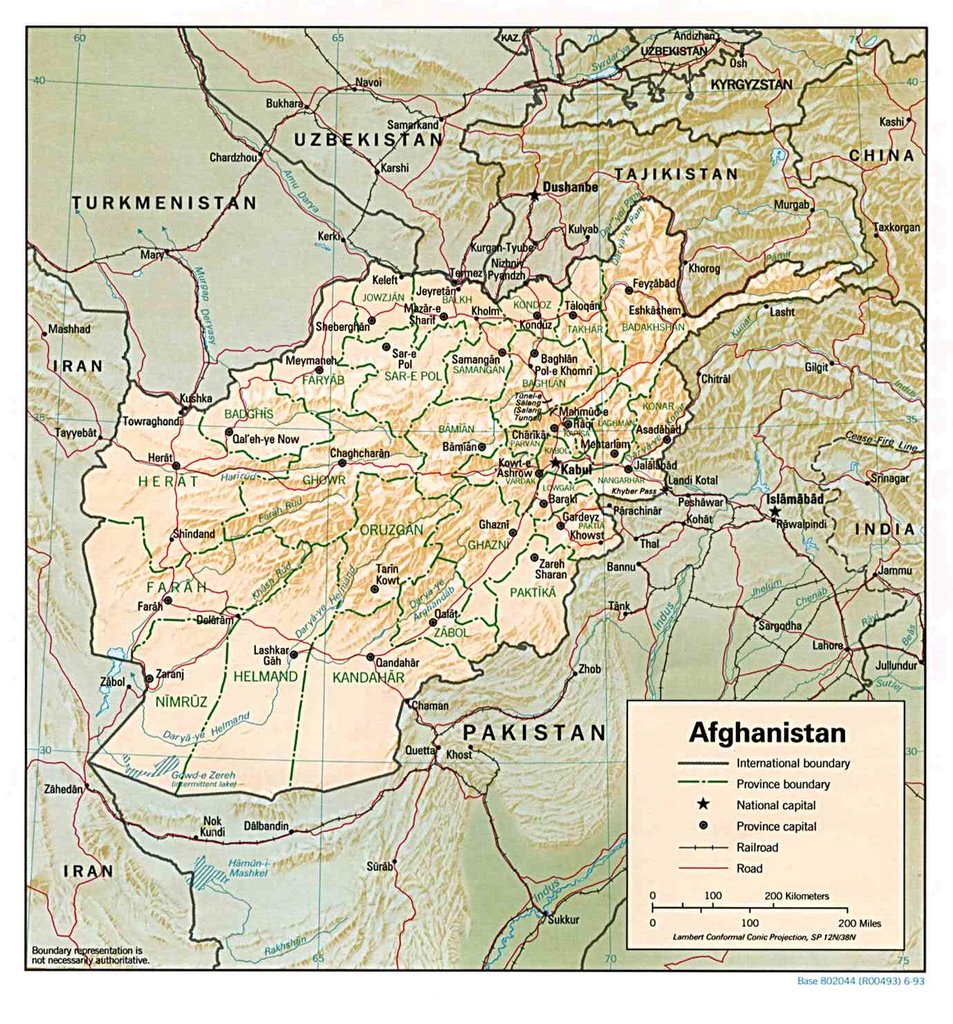
Before dawn Monday, a long column of armoured vehicles brought several hundred British soldiers to the Sangin Valley, near the town of Gereshk [see map near bottom of page at link] and Afghanistan's strategic ring road that links the cities of Kandahar and Herat.

"It is all part of a longer-term plan to restore the whole of Helmand to government control," said Lt. Col. Stuart Carver, a British commander. "You have to do it a piece at a time."

The lower valley is only about five kilometres long. But its 100 or so high-walled compounds and maze of deep irrigation channels offer good cover for determined defenders.

After fanning out to patrol on foot, the British soldiers soon came under attack, first from mortar rounds, then from regular bursts of machine-gun fire.

An Associated Press reporter travelling with the troops heard officers ordering British artillery units to respond. Three Apache helicopters [check link for differing US and UK Apache tactics - MC] flew overhead but didn't immediately open fire.

There were no reports of casualties.

NATO's International Security Assistance Force has carried out several operations in southern Afghanistan this year, hoping to pre-empt a feared Taliban onslaught, open the way for development aid, and persuade ordinary Afghans to side with the government.

Operation Achilles, begun last month, aims to oust the resurgent Taliban from around Helmand's Kajaki dam, so that multimillion dollar repairs can go ahead and the dam can supply electricity to some two million people in Helmand and neighbouring Kandahar province.

NATO officials say the operation in Sangin aims to kill die-hard Taliban fighters or push them from the area.

The effort is to involve some 1,100 British troops, 600 U.S. soldiers and more troops from the Netherlands, Denmark, Estonia and Canada. Over 1,000 Afghan government troops [emphasis added] were also taking part, military officials said.

However, it will not touch Helmand's opium fields, which supply much of the world's opium and its more potent derivative, heroin...

Alliance aircraft have dropped leaflets and broadcast advertisements on local radio stations, calling on residents to eject "tier-one" Taliban — religiously driven, seasoned fighters — or risk attacks on their homes.

"Everyone there wanting to fight, will be a determined fighter, since the message that we are coming has gone out," said Maj. Mick Aston, one of the British officers involved in the operation.
More:
Involved in the operation are about 1,100 British soldiers, 600 U.S. troops and a combined 400 troops from Canada, Netherlands, Denmark and Estonia. More than 1,000 Afghan government soldiers are also involved.

"The Canadians have been providing fire support with the big howitzers in Sangin," CTV's Lisa LaFlamme reported from Kandahar...

The mission is the latest in a series that fall under the umbrella of Operation Achilles.

"In early March ISAF (International Security Assistance Force) launched Operation Achilles to increase security conditions in the northern region of Helmand province. This will allow the Government of Afghanistan (GOA) to start the various short-, medium- and long-term Reconstruction and Development initiatives.", Maj. Gen. Ton van Loon, Regional Command South commander, said in the NATO press release.

"Today's actions will further reduce the insurgent's ability to de-stabilize the GOA. And by doing so, we are one step closer to creating a secure, stable and prosperous environment in which the planned reconstruction and development can take place."

Thursday, May 08, 2008

New fighters: Denmark vs. Canada

What the Danes are doing (AW&ST, April 28, p. 20, text subscriber only):
Denmark plans to fly air force pilots in the Boeing F/A-18E/F Super Hornet as part of its fighter evaluation process. The Danish Defense Ministry has asked the U.S. Defense Dept. to release additional information on the aircraft. The Saab Gripen and Lockheed Martin F-35 are also contenders. A selection is expected by mid-2009 [emphasis added, these things often slip].
What Canada is doing (from December 2006):
...
Canadian defense officials are eying the 2012 time frame for a final decision on what platform, or mix of platforms, will replace the F/A -18E/F Super Hornets [well no, they're just Hornets, not "Super" (warning: Boeing site)] that make up the majority [all] of Canada’s fighter fleet...

That eventual fighter force structure is expected to be transitioned into the Canadian air force between 2017 and 2020...

Saturday, March 21, 2009

I guess the MND will have to stay in Ottawa

Poor Peter, one more time:
U.S. backs Danish PM as next NATO chief: diplomats

BRUSSELS (Reuters) - The United States has told NATO allies it will back Danish Prime Minister Anders Fogh Rasmussen as the next head of the alliance, NATO diplomats and a U.S. source said on Saturday.

Rasmussen already has the support of European heavyweights Germany, Britain and France for the post of NATO secretary-general, but Washington had been considering backing Canadian Defense Minister Peter MacKay.

A U.S. source close to the administration of President Barack Obama said Washington had indicated its acceptance of Rasmussen after U.S. National Security Adviser General James Jones this month went to Denmark to visit him.

Rasmussen's spokesman Michael Ulveman said the Prime Ministry had "no comments whatsoever" on speculation the U.S. had decided to back the Rasmussen for the job.

Two senior NATO diplomats confirmed Washington had signaled to allies its acceptance of Rasmussen...
Maybe the Americans did some research on the minister's military knowledge. More here.

By the way, the Danes, with very little notice (except inside NATO circles I guess), have been doing a bang-up job in Afstan; rather more than us on a per-capita basis--see end of this post:
Denmark 700 [emphasis added-- fully in combat--more at Update here]

Sunday, January 07, 2007

MacKay lands in Afghanistan

Looks like in the New Year the government is going to be putting forth a better effort to "explain the mission" in Afghanistan. Along with the release below announcing MaKay's arrival in Afghanistan I noticed on Friday that DND released an updated comprehensive backgrounder on Afghanistan, complete with links to info like the Taliban codex, Canada-Afghanistan site, and ISAF site, amongst others.

Worth looking at on the Canada-Afghanistan site is the Kandahar Provincial Reconstruction Team Technical briefing (Powerpoint Presentation) posted on the 15th of December. (Someone should send a copy to Layton and Dion, I don't think they've had a chance to review it yet)
Minister MacKay Travels to Afghanistan, Pakistan, Sweden and Denmark

January 7, 2007
No. A/1

The Honourable Peter MacKay, Minister of Foreign Affairs and Minister of the Atlantic Canada Opportunities Agency, arrived in Afghanistan today on a two-day visit to meet with Canadian troops, diplomats and aid officials, as well as with Afghan President Hamid Karzai, Foreign Minister Rangin Dadfar Spanta, and Minister of Rural Rehabilitation and Development Ehsan Zia.

The Minister's trip to Afghanistan will be followed by visits to Pakistan, Sweden and Denmark.

Event: Call Back to Canadian Media

Date: Sunday, January 7, 2007

Time: 8:00 a.m. EST (5:30 p.m. Local time)

Media representatives interested in participating in the event by teleconference should register by contacting the Foreign Affairs and International Trade Canada Media Relations Office at 613-995-1874.


For more information, please contact:

Foreign Affairs Media Relations Office
Foreign Affairs and International Trade Canada
(613) 995-1874
http://www.international.gc.ca
Cross posted to BBS

Monday, November 17, 2008

"DND seeks more than $2B for vehicles for Afghanistan...

... Insiders question strategy given tough economic times". A typically inflammatory headline, Ottawa Citizen in this case:
The Department of National Defence plans to ask the government to approve a multibillion-dollar package to purchase new armoured vehicles and rebuild others that have been worn down by continued use in Afghanistan.

Defence Department equipment and policy bureaucrats, along with army officers, are working on the proposal they hope will be presented sometime next month.

They will ask Defence Minister Peter MacKay to approve three vehicle projects at once and the value of the combined equipment package is estimated to be more than $2 billion.

But privately, some defence industry and military representatives are questioning the strategy of asking the government for blanket approval of such a large amount of money at a time of increasing concern over the economy.

They worry that the price of the vehicle programs will make it easy for some members of cabinet to raise objections and withhold approval for all three.

The Defence Department plan proposes the purchase of what is being called a "close combat vehicle," [better known as "infantry fighting vehicle"] which would accompany the army's Leopard 2 tanks into action. The proposal also calls for the purchase of a new armoured tactical patrol vehicle and an upgrade of the existing LAV-3 armoured vehicle fleet [more here, not new "news"], which has been worn down in Afghanistan.

Mr. MacKay's press secretary, Jay Paxton, said the minister is open to looking at all equipment proposals from the department.

"The government has been clear in that they will provide our troops with the equipment and protection needed to do the jobs asked of them," Mr. Paxton said. "Having said that, no proposal has come forward to Minister MacKay's office on this particular vehicle acquisition."

Defence officials hope by tying the three projects together they can better explain the need for the vehicle...
The "news" seems to be the effort to tie all three acquistions together. The proposed acquistions really are not related to Afstan, except perhaps for the unusually rapid wear and tear on vehicles in use there, and for the realization that a tracked, armoured infantry vehicle is needed. New equipment is always required in any case, and I doubt too much would get to Afstan before our scheduled 2011 departure. And the, horrors!, $2 billion cost would be spread out over many years. But let's just have a headline that makes people question the Afghan mission.

More on one possible vehicle:

CANADIAN FORCES LOOKS AT CV90 FOR NEW CLOSE COMBAT VEHICLE

The Defence Department and the Canadian Army are looking at the CV90 as a possible candidate for a new close combat vehicle (aka infantry fighting vehicle).

The close combat vehicle program, which has yet to receive approval, would see the acquisition of new vehicles to accompany Leopard 2 tanks into the field.

Defence sources say the current LAV-3 does not have the mobility needed for the job in off-road conditions. The likely preferred option is to go for a tracked vehicle. The equipment program is one of three new projects that will be presented to Defence Minister Peter MacKay.

The CV90 had been previously looked at by the Army when it was first in development but there were concerns about its cost. But now the vehicle has proven itself and is in service with a number of armies, making it more attractive to the Canadian Forces, according to several sources.

The CV90 family has been developed to meet the requirements in six different countries; Sweden, Norway, Finland, Switzerland, Holland and Denmark, according to officials with BAE, the firm that builds the vehicles. The latest version is called 9035 MkIII and is sold to Holland and Denmark...
Not too many war-crazed countries there. The CV90 is in fact Swedish; it's the second picture at this post. Anyone know more about the "new armoured tactical patrol vehicle"? Might it be a Coyote replacement (more here)?

At least, in terms of selling to politicians, the LAV III upgrade and a Coyote replacement would probably be made in Canada--but how does the competition get rigged then? Aren't all our politicians and media against sole-sourcing (unless the source is Canadian)?

Update: Galea Hortus brought this to my attention:
...the CV90 had remained untested in live combat until November of 2007, when Norwegian Army CV90s from 2nd battalion saw heavy combat during Operation Harekate Yolo in Afghanistan. During the first week of November, Norwegian ISAF forces from 2nd Battalion and Kystjegerkommandoen [coastal light infantry - GH] based in Mazar-e-Sharif, responded to a Taliban attack on Afghan National Army forces in the Ghowrmach district. Having been heavily outnumbered by the Taliban forces, the Norwegians used mortars and, in particular, CV90s, to effectively beat down the attack. The operation left an unknown number of Taliban casualties, but Norwegian news sources say as many as 45 to 65 Taliban forces may have been killed, and many more wounded. [4]

The CV90 was later used extensively by ISAF-forces of the Norwegian Army's Telemark Battalion in May 2008, when the battalion, during Operation Karez in the Badghis Province, came under heavy machine gun and RPG fire from Taliban fighters. The attack left 13 Taliban fighters dead, and unknown number of wounded. No allied casualties were reported. [5]...

Ah yes, those Norwegian warmongers in their CV90s; may we be so lucky.

Saturday, October 03, 2009

President Obama recognizes Danish military effort in Afstan

Good on him:
...
I should add that we are grateful generally for the sacrifices of the people of Denmark with respect to our efforts in Afghanistan. They are very difficult, but Denmark is a country that has consistently, I think, been willing to sacrifice both time, resources, and obviously, most importantly, personnel in the broad efforts there to stabilize the country. And we're grateful for that, as well...
Pity that almost nobody in North America will notice. More on the...
Danish [combat] contribution in Afstan...

Monday, April 19, 2010

Aghan detainees: Two relevant aspects

Note the bolded bits in this CP story:
KANDAHAR, Afghanistan — Canada outstripped its NATO allies almost two-to-one in the number of prisoners it turned over to Afghan authorities in the first nine months of last year, figures prepared for the Afghan government show.

The statistics were compiled by the Afghanistan Independent Human Rights Commission and made available to The Canadian Press. Ottawa does not release them...

The commission, which relies heavily on Canadian government funding and mentorship, says between January and the end of September 2009, it was notified that 267 suspected insurgents were transferred by Canada, Britain, the Netherlands and Denmark. The United States has its own separate system for dealing with captured Taliban.

Among NATO allies, the Canadian army was way out in front with 163 prisoners [emphasis added]. Britain followed with 93 confirmed transfers; the Netherlands 10 and Denmark 1.

Unlike those countries, who make these numbers publicly available, Ottawa refuses to release its figures [emphasis added], citing operational security and the safety of troops as the reason. Before the U.S. surge, the explanation was that giving away the number of captured with so small a Canadian force on the ground would help the Taliban track where their people might be.

The Canadian numbers, however, are available for the asking in this country...

NATO guidelines say prisoners must be transferred within 96 hours, but a source said the Canada's process is so involved and so rigorous that the deadline is often missed. The British also regularly miss the deadline for much the same reason...
By the way, for all those who claim CF members may be vulnerable to international war crimes charges for turning over detainees, what about the Brits and Dutch--not to mention how the Americans may have treated those they hold themselves?

BruceR. has his own observations at Flit:
Good piece on detainee practice, but some questions

Interesting piece on Canadian military detainee practice. I can't corroborate the numbers given: over 4 detainees on average a week through the Canadian cage would have seemed very high to me, but I was only there for some of the report period, too.

The actual AIHRC report isn't any more illuminating, and has some issues of its own that should probably have raised some journalistic eyebrows...

It may also be worth noting that really the only two organizations dedicated to holding any Afghans for questioning (the NDS and U.S. forces) both currently deny access to the AIHRC, as UNAMA reported back in March (page 8). So AIHRC really only ever sees any of these people after they've passed into and through the court/prison process and out of questioners' control.

The UNAMA report, which doesn't deal in any numbers, should probably be seen as the more reliable assessment of actual progress, FWTW. Its summary: "Conflict-related detention policies in Afghanistan continue to be a major concern given the lack of a legal framework which complies with Afghanistan’s obligations under international and national law." I'm afraid so long as that's the case, that the UN official position is that Afghanistan remains essentially a lawless country, these allegations by human rights activists aren't going to be going away.

Long story short (speaking now as an ex-journalist AND ex-PR guy): I'll be a little surprised if the Canadian government publicly accepts or corroborates the AIHRC detainee figures come Monday, although they will also be determined not to disparage the fine Afghan organization the figures came from, either. That's a fine tightrope to walk, though: the chances for someone tripping up and saying something untoward when asked about it could be rather high.

Monday, November 12, 2007

Talk about spinning for some of our allies in Afstan

Scott Taylor is truly being economical with the truth:
...Step forward, NATO slackers.

That’s right: As Canada "punches above its weight" in Kandahar, we are not achieving complete success because other NATO countries are failing to do their bit for the alliance. The latest rallying cry of the Canadian tub-thumpers is that Afghanistan is NATO’s Waterloo and that if our partners don’t step up to the plate to win, we should consider cutting short our own commitment.

Two of the most maligned NATO countries accused of shirking their martial responsibilities are France and Germany. What is ironic about Canadians criticizing these particular allies is that as well as contributing significant contingents to Afghanistan (50 per cent more than Canada, in Germany’s case), they are both still heavily engaged in providing security forces in Bosnia and Kosovo [now that's a rich verbal twist: "security forces", implying something like the CF at Kanadahar when in fact the forces in the Balkans are doing traditional peacekeeping without combat--though the clouds are darkening - MC].

While Canada has rushed from flavour-of-the-month conflicts over the past decade, many of our NATO allies have been left manning the less newsworthy but still simmering hot spots.

Canada has chosen to place its military eggs into the one Afghan basket, but we should not be so quick to point fingers and denigrate those countries whose ongoing commitments elsewhere allow us the dubious luxury of being in the front-line spotlight [what tosh, Mr Taylor: those commitments elsewhere in no way preclude those countries from giving their troops a "front-line" role in Afstan].

(staylor@herald.ca)

Scott Taylor is editor-in-chief of the military magazine Esprit De Corps.
Mr Taylor should stop making disingenuous excuses and listen to the Danish prime minister; the meaning behind some of his diplomatic phrasing is clear:
Denmark's prime minister on Monday urged other NATO nations to send more troops and money to boost the alliance's operations in Afghanistan.

NATO has some 41,000 troops in Afghanistan, but commanders complain the mission lacks helicopters, mobile units and instructors to train the Afghan army. The alliance also needs more quick-maneuver units to take control of territory won from the Taliban [emphasis added--i.e. combat troops].

"I urge all our partners in NATO to reconsider their contributions to the Afghan mission," Prime Minister Anders Fogh Rasmussen told reporters. "I think we need not only more troops, but also more solidarity in the NATO alliance [emphasis added--i.e. get rid of those caveats]."

If alliance members cannot contribute with more soldiers, "it might be possible to provide NATO with funds to finance the operation in Afghanistan," he said.

In September, Denmark increased its contingent in the NATO force in Afghanistan from 440 to some 600 troops. The bulk of the Danes are based in the volatile Helmand province, the scene of some of the heaviest recent fighting.

"The security situation in the southern part of Afghanistan is definitely not satisfactory [emphasis added--"security" here is clearly in context of needing combat-authorized troops]," Fogh Rasmussen said.

Seven Danish troops have been killed in Afghanistan.

Monday, June 01, 2009

"Not lonely in Afghanistan‏"

A letter sent to the Globe and Mail and not published:
The situation of the Canadian Forces in Afghanistan is badly misrepresented in your story May 30 about the appearance in Toronto of former U.S. presidents Clinton and Bush ("For $2,500, jokes from leaders who 'used to believe in free speech" [different title online]). The story states that "until recently Canada has been battling alone" in that country and that Mr. Bush's "impregnable rhetoric...has made the last four years lonely for Canadian soldiers." Hardly.

Four years ago in May 2005 our military mission was based at Kabul and was essentially engaged in peacekeeping, not combat. Many other troops from NATO's International Security Assistance Force (ISAF) were in the area; one doubts ours felt especially alone.

Then, in early 2006, the Canadian Forces assumed a combat role as the lead country for Kandahar province in Regional Command South. Our strength was some 2,500 personnel (now 2,830 with a recent increase in Air Force personnel). That was a large individual contingent by ISAF standards, but only a small proportion of NATO's total forces.

Moreover we were hardly alone fighting in the provinces of Regional Command South. A British force (now some three times larger than the Canadian) was established around the same time in neighbouring Helmand province, together with a Dutch force in Uruzgan province that is somewhat smaller than ours. Significant numbers of Danish troops have been fighting with the British and Australia has sent a major contingent to help the Dutch. And, for about a year, there has been a Romanian battalion in Zabul province.

Of course there have been many further thousands of ISAF forces in the other Regional Commands: East, West, North and Capital (Kabul).

We have not been that lonely at Kandahar itself. For some time a British battalion has been based at Kandahar Air Field as a battle group for Regional Command South as a whole. Since August last year about half the combat strength of Canadian-led Task Force Kandahar has been contributed by a US Army battalion.

Now some 10,000 American forces are deploying to Kandahar province--some ordered there by President Bush and some by President Obama.

Some loneliness. With such sloppy reporting in "Canada's National Newspaper" it is little wonder that many Canadians are ill-informed about our Afghan mission.

Regards,

Mark Collins
Ottawa

References--see bottom of these ISAF placemats of country troops strengths:

Jan. 2007:
http://www.nato.int/isaf/docu/epub/pdf/placemat_archive/isaf_placemat_070129.pdf

Feb. 2008:
http://www.nato.int/isaf/docu/epub/pdf/placemat_archive/isaf_placemat_080206.pdf

Dec. 2008:
http://www.nato.int/isaf/docu/epub/pdf/placemat_archive/isaf_placemat_081201.pdf

April 2009:
http://www.nato.int/isaf/docu/epub/pdf/placemat.html

Placemats for other dates:
http://www.nato.int/isaf/docu/epub/pdf/placemat.html

Denmark (note per capita contribution)
http://www.ambottawa.um.dk/en/menu/InfoDenmark/Denmark+in+Afghanistan/
http://www.ambottawa.um.dk/en/servicemenu/News/DenmarkincreasesitssupporttoAfghanistan.htm

Netherlands:
http://www.minbuza.nl/en/themes,international-cooperation/afghanistan/militaire-inzet

Australia:
http://www.defence.gov.au/opEx/global/opslipper/index.htm

Romanian battalion:
http://english.mapn.ro/cpresa/continuarearhiva.php?id=3010

UK battalion:
http://www.army.mod.uk/news/13851.aspx

British generally:
http://www.operations.mod.uk/afghanistan/summaryarchive2.htm

US battalion:
http://toyoufromfailinghands.blogspot.com/2008/08/that-us-army-battalion-for-kandahar-has.html
http://www.comfec-cefcom.forces.gc.ca/pa-ap/ops/fs-fr/jtfa-foia-eng.asp#e

US forces, Bush and Obama
http://toyoufromfailinghands.blogspot.com/2009/05/afstan-us-forces-increase-under-obama.html

Canada in Afghanistan:
http://www.cbc.ca/canada/story/2009/02/10/f-afghanistan.html
Here's a letter the Globe did print:
Something to declare

Donald Dawson
Ottawa

I fear Friday's visit by two former U.S. presidents (A Presidential Showdown: Leno Versus Letterman - May 30) reveals more about us than them. How arrogant and ill-informed we must be to really think that "until recently Canada has been battling alone" in Afghanistan. How superior we must feel to mill about outside, judging George Bush and Bill Clinton war criminals while inside gasping at their ignorance regarding waiting times on this side of the border. We never seem to have trouble feeling superior to our neighbours to the south.

Monday, January 08, 2007

Trouble coming for NATO Flying Training Centre, Moose Jaw?

The Danes will be pulling out.
Denmark has formally notified the federal government it will pull out of military flight training in Canada in three years, The Canadian Press has learned.

The move further clouds the future of the Bombardier-run NATO Flight Training in Canada (NFTC) program. It is the latest setback for the advanced flight-training school, which operates out of 15 Wing in Moose Jaw, Sask., and 4 Wing at Canadian Forces Base Cold Lake in Alberta.

An air force spokesman confirmed the decision by the Danes to end their contract in 2010, but denied it would spell the end of the $3.4-billion program...

"It has no impact on the NFTC program" other the fact fewer students will be enrolled, said Brian Watson, director of major procurement at the Defence Department. "We would have preferred them to stay."

He said the centre will continue to operate until the end of the 20-year contract with Bombardier because Canada will still need to train fresh pilots.

First conceived in 1994 when private-public partnerships were especially popular, the privately operated, publicly funded flying school has struggled to attract students. The centre has taught pilots to fly jets, multi-engined turbo-prop planes and helicopters since 1998.

Canada, Denmark, Hungary, Italy, Britain and the United Arab Emirates are among the countries that have sent students to the school, where they've been taught to fly BAE Systems' Hawk 155 jets and Raytheon's T-6A Harvards...

Competition from a new consortium aimed a F-35 pilots may be a factor:

A one-year contract with the UAE ends this year and Britain's arms procurement minister, Lord Peter Drayson, announced Nov. 30 that British authorities had appointed the Ascent Consortium - made up of the VT Group and Lockheed Martin - to train Royal Navy and Royal Air Force pilots.

Lockheed Martin is principle contractor in the design and construction of the next generation of attack jet - the Joint Strike Fighter, or F-35 Lightning II.

In its partnership with the VT Group, the U.S. giant is using state-of-the-art ground trainers that defence industry insiders say outstrip anything at the NFTC...

Tuesday, October 17, 2006

Canadian Navy leading NATO force in Med

Operation Active Endeavor by Standing NATO Maritime Group 1.

Canada's navy is leading counterterrorism operations in the Mediterranean as part of its command of a NATO high-readiness reaction force.

The Canadian-led naval flotilla recently sailed into the Mediterranean as part of Operation Active Endeavor, NATO's response to the war on terror.

''The role is to do counterterrorism, to go after the bad guys that are involved in the illegal smuggling of weapons, humans, and in some cases terrorists,'' Commodore Denis Rouleau said from his command ship HMCS Iroquois.

He took command in January of the alliance's naval force, dubbed the Standing NATO Maritime Group 1. Over the last nine months, it's been training and operating in the North Atlantic, the North Sea and the Mediterranean under Canadian command.

The five-ship NATO force is to keep an eye on the large amount of ship traffic in the Mediterranean, singling out suspicious vessels or conducting routine inspections...

...the force takes part in NATO exercises. It recently finished an exercise off the coast of Denmark designed to test methods to rescue civilians trapped in a war zone. Earlier this summer, the flotilla took part in exercises near the Cape Verde Islands off West Africa.

NATO nations take turns in commanding the task force, but that is limited to countries that operate command and control ships. Canada has such vessels with HMCS Iroquois and HMCS Athabaskan, which Rouleau operated from during the first part of the year.

More NATO nations, such as Spain and Denmark, are acquiring command and control ships so Canada will likely have to wait probably seven or eight years before having its turn again to assume command over the flotilla, he said.

Canada's command and control destroyers are aging and need replacement, according to a newly released report from the standing Senate committee on national security and defence. The report recommended the government move ahead with what is known as the Single Ship Replacement, a type of new vessel that would replace both the Iroquois-class destroyers and the navy's Halifax-class frigates.