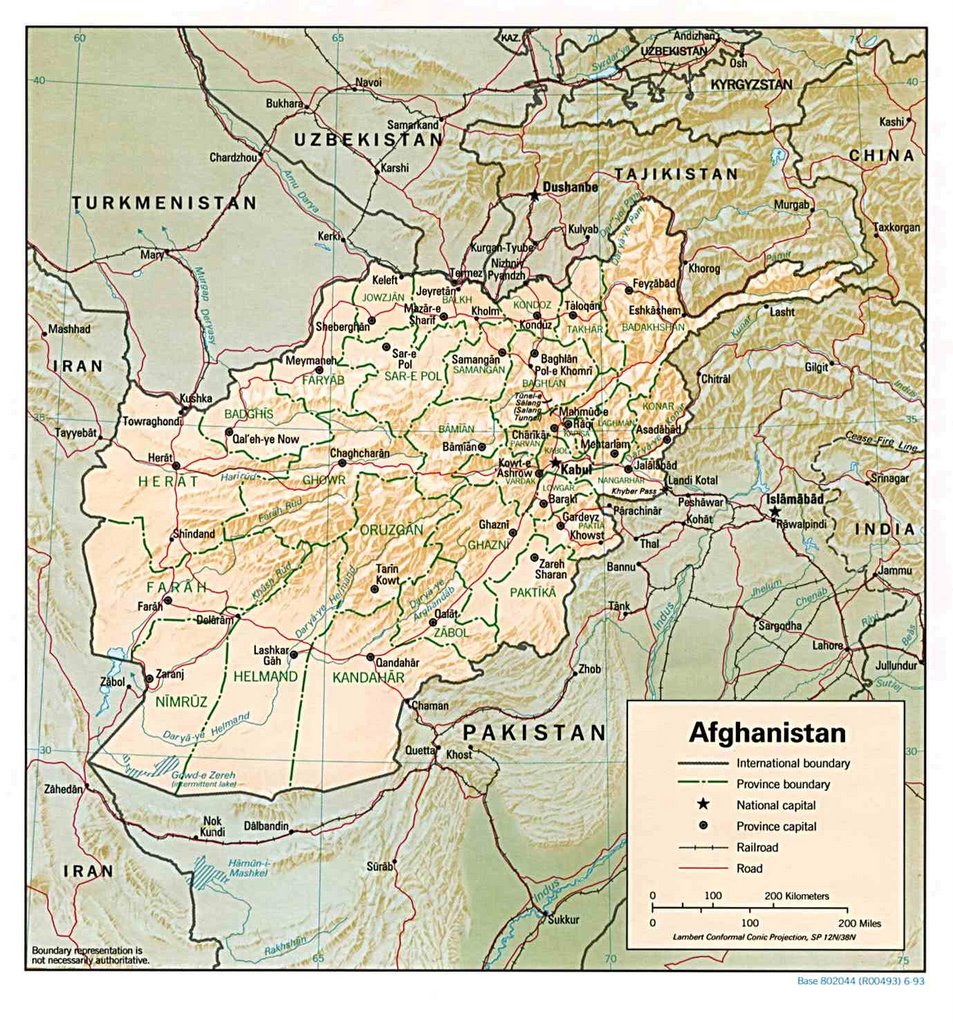
Tuesday, March 11, 2008

Centcom commander resigns

Admiral Fallon was recently in Ottawa and supported our combat role in Afstan (CTV video here). It now seems that he and the Bush administration have had a falling out. One trusts there will be no negative effect on American efforts in Afstan, which fall under Centcom:
Adm. William Fallon is stepping down as head of the U.S. Central Command, which oversees military matters in the Middle East, Defense Secretary Robert Gates announced Tuesday.

Gates said that Adm. William J. Fallon had asked for permission to retire and that Gates agreed. Gates said the decision, effective March 31, was entirely Fallon’s and that Gates believed it was “the right thing to do.”

Fallon was the subject of an article published last week in Esquire magazine that portrayed him as opposed to President Bush’s Iran policy. It described Fallon as a lone voice against taking military action to stop the Iranian nuclear program.

Fallon, who is traveling in Iraq, issued a statement through his U.S. headquarters in Tampa, Fla.

'Distraction' cited

“Recent press reports suggesting a disconnect between my views and the president’s policy objectives have become a distraction at a critical time and hamper efforts in the Centcom region,” Fallon said.

“And although I don’t believe there have ever been any differences about the objectives of our policy in the Central Command area of responsibility, the simple perception that there is makes it difficult for me to effectively serve America’s interests there,” Fallon added.

Gates described as “ridiculous” any notion that Fallon’s departure signals the United States is planning to go to war with Iran. And he said “there is a misperception” that Fallon disagrees with the administration’s approach to Iran.

“I don’t think there were differences at all,” Gates added...
From the Esquire article (it seems to me that Admiral Fallon may have not been completely on board regarding Iraq too, if the reporting is accurate):
...
The rollback of Al Qaeda seems to be both real and continuing, save for the border region of Pakistan. And to gain greater flexibility to plan for the region, Fallon says that he is determined to draw down in Iraq. One of the reasons Fallon says he banished the term "long war" from Centcom's vocabulary is that he believes real victory in this struggle will be defined in economic terms first, and so the emphasis on war struck him as "too narrow." But the term also signaled a long haul that Fallon simply finds unacceptable. He wants troop levels in Iraq down now, and he wants the Afghan National Army running the show throughout most of Afghanistan by the end of this year [emphasis added]. Fallon says he wants to move the pile dramatically in the time he's got remaining, however long that may be. And he gets frustrated. "I grind my teeth at the pace of change."

Freeing the United States from being tied down in Iraq means a stronger effort in Afghanistan [emphasis added], more focus on Pakistan, and more time spent creating networks of relationships in Central Asia...
See also p. 3 of the piece for the Admiral in Afstan.

Regardless of any difference over Iran, if you read the whole piece you'll see how much more freely senior American officers speak than even CDS Gen. Hillier. And while there is clear partisanship in the quote below, the general view on the latitude allowed senior officers is the common one in the US, unlike Canada:
...
Some Democrats in Congress, including Senate Majority Leader Harry Reid of Nevada, seized on Fallon's resignation to assert that it reflected an effort by the Bush administration to stifle dissenting opinion.

"I am concerned that the resignation of Admiral William J. Fallon, commander of all U.S. forces in the Middle East and a military leader with more than three decades of command experience, is yet another example that independence and the frank, open airing [emphasis added] of experts' views are not welcomed in this administration," Reid said...
Update: More via an e-mail from the Conference of Defence Associations' Executive Director:
Yesterday, Admiral William Fallon, Commander of US Central Command, resigned from his post, citing perceived differences between his views and those of the US administration.

Many in the press have referred to an Esquire magazine article on Fallon by Thomas Barnett, entitled "The Man Between War and Peace". A link is provided below to this lengthy and fascinating article.
http://www.esquire.com/features/fox-fallon

We would like to remind readers that Admiral Fallon was a speaker
at the CDA conference last month, and that Thomas Barnett spoke
at the CDA Institute seminar in March 2005.

Thom Shanker in the New York Times reports on this development.
See link below.
http://www.nytimes.com/2008/03/12/washington/12military.html

Sara Carter in the Washington Times (link below) reports on the
differences between Fallon and the US President over Iran.
http://washingtontimes.com/apps/pbcs.dll/article?AID=/20080312/NATION/165288
292/1001

An article in the Wall Street Journal (link below) provides a
political and military context to the move, in light of internal
US military debate over Iraq.
http://online.wsj.com/public/article_print/SB120527897136528683.html

A report in the Washington Post (link below) outlines the
differences of opinion over Iraq between Admiral Fallon and
General David Petraeus.
http://www.washingtonpost.com/wp-dyn/content/article/2007/09/08/AR2007090801
846_pf.html

The Los Angeles Times has published an article by Max Boot that
outlines the reasons why Fallon's tenure as Commander US Central
Command could be viewed as a failure. Link is below.
http://www.latimes.com/news/opinion/la-oe-boot12mar12,0,5337128.story

Wednesday, March 05, 2008

Afstan: Don't tell M. Dion

Might it just be possible that the CF will be involved?
The top [US] military commander in the Mideast [and much more] said Wednesday that he does not expect Taliban forces in Afghanistan to launch a spring offensive this year.

If anything, he said, he sees the momentum continuing to swing in the direction of coalition forces.

"The spring offensive is going to be by our people, as they move out and take advantage of the situation that they helped create through their good works there in the fall of last year," Adm. William Fallon told the House Armed Services Committee.

The U.S. is sending another 3,200 Marines to Afghanistan, in part to stave off any uptick in violence that might come with the warmer weather.

Fallon said the influx of troops will give Gen. Dan McNeil, head of forces in Afghanistan, the "shot in the arm he needs to really go after the security, particularly in the south, where he intends to deploy those forces."..

Fallon said that despite an increase in violence last year, coalition forces still have degraded the Taliban's ability to attack. The rise in suicide attacks, while alarming, is confined to about 10 percent of the total districts in Afghanistan, he said...
Update: The Globe and Mail, naturally, buries the story in an IN BRIEF piece. But at least they ran it. As far as I can see the National Post, Toronto Star and Ottawa Citizen all ignored the story completely.

Wednesday, December 26, 2007

Afstan: Dealing with the Pakistan "sanctuary"

Looks like the US will do something serious:
U.S. Troops to Head to Pakistan

Beginning early next year, U.S. Special Forces are expected to vastly expand their presence in Pakistan, as part of an effort to train and support indigenous counter-insurgency forces and clandestine counterterrorism units, according to defense officials involved with the planning.

These Pakistan-centric operations will mark a shift for the U.S. military and for U.S. Pakistan relations. In the aftermath of Sept. 11, the U.S. used Pakistani bases to stage movements into Afghanistan. Yet once the U.S. deposed the Taliban government and established its main operating base at Bagram, north of Kabul, U.S. forces left Pakistan almost entirely. Since then, Pakistan has restricted U.S. involvement in cross-border military operations as well as paramilitary operations on its soil.

But the Pentagon has been frustrated by the inability of Pakistani national forces to control the borders or the frontier area. And Pakistan's political instability has heightened U.S. concern about Islamic extremists there.

According to Pentagon sources, reaching a different agreement with Pakistan became a priority for the new head of the U.S. Special Operations Command, Adm. Eric T. Olson. Olson visited Pakistan in August, November and again this month, meeting with Pakistani President Pervez Musharraf, Pakistani Joint Chiefs of Staff Committee Chairman Gen. Tariq Majid and Lt. Gen. Muhammad Masood Aslam, commander of the military and paramilitary troops in northwest Pakistan. Olson also visited the headquarters of the Frontier Corps, a separate paramilitary force recruited from Pakistan's border tribes.

Now, a new agreement, reported when it was still being negotiated last month, has been finalized. And the first U.S. personnel could be on the ground in Pakistan by early in the new year, according to Pentagon sources.

U.S. Central Command Commander Adm. William Fallon alluded to the agreement and spoke approvingly of Pakistan's recent counterterrorism efforts in an interview with Voice of America last week.

"What we've seen in the last several months is more of a willingness to use their regular army units," along the Afghan border, Fallon said. "And this is where, I think, we can help a lot from the U.S. in providing the kind of training and assistance and mentoring based on our experience with insurgencies recently and with the terrorist problem in Iraq and Afghanistan, I think we share a lot with them, and we'll look forward to doing that."

If Pakistan actually follows through, perhaps 2008 will be a better year.

By William M. Arkin | December 26, 2007
An earlier story:
U.S. Hopes to Use Pakistani Tribes Against Al Qaeda
Update: It'll be interesting to see what effect the assassination of Benazir Bhutto has--on the US military involvement in Pakistan and on the sanctuary more broadly:
Fresh from a trip to Afghanistan, Laurie Hawn said Thursday the assassination of Benazir Bhutto only reinforces the need for Canadian troops to stay in the troubled region.

Hawn, MP for Edmonton Centre [now Parliamentary Secretary to the Minister of National Defence, and a former Air Force fighter pilot], said that the death of the former Pakistani prime minister goes to show the presence of the Canadian forces is necessary for bringing stability to the area.

“There are elements out there that just flat-out do not want stability to come to that part of the world, which again is all the more reason why Canada needs to stay involved,” said Hawn adding that what happens in Pakistan is bound to affect neighbouring Afghanistan.

Hawn arrived at the Edmonton International Airport Thursday afternoon after spending Christmas in Afghanistan, visiting the troops and assessing the country’s progress.

“We’re giving them their lives back,” he said...
Upperdate: Another reason for prime minister Harper to be grumpy:
U.S. Fears Greater Turmoil In Region
Pakistan's Crisis Could Affect War In Afghanistan

Thursday, April 24, 2008

US considering command structure changes for Afstan

The problem of command structures in Afstan has been noted for some time. From the Manley panel report:
...a top-heavy command structure at ISAF headquarters in Kabul; an absence of a comprehensive strategy directing all ISAF forces in collaboration with the Afghan government; limitations placed by some NATO governments on the operations of their units, which effectively keep those forces out of the conflict; and inadequate coordination between military and civilian programs for security, stabilization, reconstruction and development. One source of ISAF inefficiencies, cited by senior NATO officers, is the too frequent rotation of ISAF commanders at its Kabul headquarters and in the regional commands...
And it's not just ISAF, it's the links between ISAF and US Operation Enduring Freedom; Paddy Ashdown wrote in July 2007:
One can normally at least rely on the military to understand the importance of unity of command. But in Afghanistan, even this is absent. The US military are not exclusively under the command of Nato's mission in Afghanistan...This is exactly the fractured command structure that led to the US disaster in Somalia.
As for US forces (see Update):
Combined Joint Task Force-82 (CJTF-82)[now Combined Joint Task Force-101] is a U.S.-led subordinate command of NATO’s International Security Assistance Force (ISAF). CJTF-82 serves as both the National Command Element for U.S. forces in Afghanistan, reporting directly to the U.S. Central Command commander, and as ISAF’s Regional Command – East...
Now the US is thinking openly about the problem. But any proposed changes that would somehow give Centcom a greater direct role vis-a-vis ISAF, or that would weaken ISAF authority over US forces in Regional Command South, would certainly be "a sensitive matter in terms of the eyes of our allies". The cat's amongst the pigeons--as it should be--but real improvements will be a hard sell indeed.
...
Central Command normally supervises U.S. military involvement in both Iraq and Afghanistan. But a year and a half ago most of the international forces in Afghanistan, including most of the U.S. troops, were put under NATO control, leaving the Central Command chief outside their chain of command.

That is something Secretary Gates says U.S. officials might want to change.

"There's been a lot of discussion in this building about whether we have the best possible command arrangements in Afghanistan," said Secretary Gates. "I've made no decisions. I've made no recommendations to the president. We're still discussing it."

Afghanistan currently has a dual command structure, with some of the 35,000 U.S. troops, and some forces from other nations, still under the original U.S.-led coalition that invaded Afghanistan in 2001.

Some officers complain that the dual command is not as effective or coordinated as it should be. But Secretary Gates says it may be difficult to change.

"The command structure, I think, is a sensitive matter in terms of the eyes of our allies," he said. "And so if there were to be any discussion of changes in the command structure, it would require some pretty intensive consultations with our allies and discussion about what makes sense going forward."

Secretary Gates says there have been no such consultations so far.

But unless the structure is changed, General Petraeus' ability to impact the military effort in Afghanistan will likely be limited, as was the ability of his predecessor Admiral William Fallon. Still, Secretary Gates says he expects General Petraeus to have some focus on Afghanistan...

The questions about the Afghanistan command structure persist in spite of the fact that both the top NATO commander in the country and his superior at NATO military headquarters near Brussels are Americans. But those officers are limited by NATO policy decisions, made by consensus, and by restrictions most member states put on the use of their forces [that's not what a pernicious Canadian professor would have us believe].

New US Centcom commander and Afstan

The nomination of Gen. Petraeus could be good news for efforts there (note bolded bits--tension between Iraq and Afstan commitments):
...
The nomination of General Petraeus could...portend a renewed American focus on Afghanistan, where the American war effort is widely recognized to be lagging, with violence by the Taliban and Al Qaeda on the rise. Mr. Gates [Secretary of Defense] already has expressed the desire to send several thousand additional troops to Afghanistan next year, although that could require further reductions in troop commitments to Iraq [emphasis added]. General Petraeus would be expected to apply his views of counterinsurgency to Afghanistan, which may include a push toward increased troops.

Mr. Gates said he and President Bush settled on General Petraeus for the post because his counterinsurgency experience in Iraq made him best suited to oversee American operations across a region where the United States is engaged in “asymmetric” warfare, a euphemism for battling militants and nonuniformed combatants

The previous Central Command chief, Adm. William J. Fallon, chose early retirement in March after rankling the Bush administration with public comments that seemed to suggest differences with the White House. If General Petraeus and General Odierno [nominated to be senior commander in Iraq] were to win Senate confirmation to their new posts, Mr. Gates said, they would take over in late summer or early fall...

He [Petraeus] returned to Iraq to serve as commander of training Iraqi security forces, then commanded Fort Leavenworth, where he oversaw the writing of the Army’s new counterinsurgency manual [full text here], certain to influence his efforts in Afghanistan, too, if he is confirmed to the Central Command job.

General Petraeus’s challenge as leader of Central Command will be to avoid being trapped in continued, detailed management of the Iraq mission as he takes on vast geographical responsibilities across North Africa, the Middle East and Central Asia, which clearly are the focus of American policy today far and above Europe or East Asia...

The announcement that General Petraeus, 55, would head Central Command, and Mr. Gates’s emphasis on operations in Afghanistan as well as Iraq, reinforced the impression that Pentagon leaders expected the United States to have significant numbers of troops deployed in those two countries for some time to come...
More:
...
In his new job, Petraeus will have responsibility for overseeing military operations from the Horn of Africa through the Persian Gulf to Pakistan and Afghanistan.

Oversight of the war in Afghanistan is split between the U.S. Central Command and NATO.

Afghanistan will pose an interesting challenge for Petraeus. While U.S. and NATO commanders there have been requesting more troops, any additional U.S. forces for Afghanistan would have to come from Iraq [emphasis added].

"The main question is will he be willing to see resources shift from Iraq to Afghanistan?" said Crowley, the retired Air Force colonel, who now advises the presidential campaign of Democrat Hillary Rodham Clinton.

Gates said Wednesday that Petraeus' role in Afghanistan would be somewhat limited.

But historian Crane said that as Centcom commander, Petraeus will have plenty of opportunities to inject new ideas into the Afghanistan fight. Petraeus knows how to work with allied commanders, and his reputation will ensure that people listen to his ideas, Crane said.

"This job will give Gen. Petraeus more of a chance to influence what is going on in Afghanistan," said Crane, a retired Army colonel who helped Petraeus write the Army's 2006 counterinsurgency field manual.

"If you were someone who thought Afghanistan was in need of a fresh approach, you should be excited about Gen. Petraeus' appointment."
And more:
...
Top U.S. commanders in Afghanistan, where a record 32,000 American troops are deployed, have asked for as many as three more brigades, which senior commanders say would be available only if drawdowns from Iraq continue [emphasis added]. Pentagon officials are weighing whether the command structure in Afghanistan should be changed, Gates said [emphasis added--post on this here], while the overall strategy for the country is also under review. Violence in Afghanistan increased sharply last year.

"One fascinating question will be the degree to which Petraeus's Iraq counterinsurgency doctrine will work in Afghanistan," said Michael E. O'Hanlon, a military analyst at the Brookings Institution...

Wednesday, January 16, 2008

Afstan: US Secretary of Defense stirs up a hornets' nest

Was he quoted accurately and in context? If yes, he should staple his lips when talking to reporters:
Gates faults NATO force in southern Afghanistan
The hornets:
NATO aghast at U.S. criticism of Afghan allies
The second story contains a Pentagon clarification:
In Washington, Mr. Gates' spokesman Geoff Morrell said the secretary had "read the article and is disturbed by what he read."

Mr. Morrell did not challenge the accuracy of the quotes in the story, but said he thought it left the wrong impression — that Mr. Gates had singled out a particular country.

"For the record he did not — to the L.A. Times or at any time otherwise — publicly ever criticize any single country for their performance in or commitment to the mission in Afghanistan," Mr. Morrell told Pentagon reporters in Washington.

Instead, Mr. Morrell said Mr. Gates had pointed out that "NATO as an alliance, does not train for counterinsurgency. The alliance has never had to do it before."..
Another version of this AP story is here. More on bickering at this earlier post.

My understanding, from a knowledgeable source, is that in fact we went into combat at Kandahar in 2006 having trained along Cold War lines based on the "Fulda Gap" scenario (Mr Gates coincidentally remarks: '"Most of the European forces, NATO forces, are not trained in counterinsurgency; they were trained for the Fulda Gap," Gates said, referring to the German region where a Soviet invasion of Western Europe was deemed most likely.'). However the CF have been exceptionally rapid at learning counterinsurgency lessons and putting them into practice; they are now very well trained for what they're doing. The source made a rather rude remark about Mr Gate's claims as they relate to the present.

Mr Gates has sparked a rather active discussion at Milnet.ca. One especially apposite comment:
Is he commenting on the day-to-day tactical abilities of NATO units, or more at the operational execution of these grand NATO HQ's with a piece of the pie for everybody?

He probably has some merit in commenting on the relative inexperience of other countries [the Brits?]. Let's be frank, Canada's last counterinsurgency effort was the Boer War. Although our experience (and the fact that most of our Army participated) in the Balkans has given us some institutional foundation for operating in a complex, ethnically/tribal riven, religiously fuelled conflict, I think we can say that we walked into Kandahar without really knowing fully what we were doing. We sent a mechanized battlegroup that was trained and organized to fight in Europe. We are fighting an insurgency with tanks and artillery - but whether these are useful or not is debatable; Mr Gates own military seems to delight in using them to smash insurgent strongholds like Fallujah. We don't have a counterinsurgency doctrine in place, and the draft of the one didn't make it too far before the preface became a political gongshow. Politically, our government(s) didn't know how to explain this to Canadians, and Canadians didn't know how to process it.

So, sure, maybe he does have merit by saying we're not "structured" or "experienced" like the Americans to prosecute this war. But that doesn't mean we ain't trying and we ain't learning, and I'll bet my backpay that we are far better off now then we were two years ago when we first went in...
Here's an article on the evolution of US counterinsurgency doctrine in Iraq. And here is the US plan for ISAF Regional Command East where they are in control:
The Afghan army will lead nearly all military operations in eastern Afghanistan this year, with U.S. troops in a support role, a top American general said Wednesday.

It's the next step in a strategy to increase the strength of Afghanistan's military so U.S. forces can leave one day...
Sounds familiar, if more advanced than our situation at Kandahar. And along the lines of what the Manley panel looks like recommending.

Here's some other potentially positive news (sorry, the post has grown like topsy):
Pakistan is taking a more welcoming view of U.S. suggestions for using American troops to train and advise its own forces in the fight against anti-government extremists, the commander of U.S. forces in that region said Wednesday.

Navy Adm. William J. Fallon, commander of U.S. Central Command, said he believes increased violence inside Pakistan in recent months has led Pakistani leaders to conclude that they must focus more intensively on extremist al-Qaida hideouts near the border with Afghanistan...
This type of assistance, it must be kept in mind, is something separate from expanded (and controversial) US covert operations in Pakistan.

Update: From the reporter's mouth:
L.A. Times journalist Peter Spiegel stuck to the story he broke, telling Mike Duffy Live (video here) that Gates was very clear in his criticisms and doubts about the training received by the U.S.'s allies in the region.

"The question as I presented it to him is I had actually been hearing a lot of buzz in the Pentagon from military leaders that they had been concerned about the south, and again, what they call a lack of capability of the NATO forces in the south in counterinsurgency," said Spiegel in Los Angeles.

"I asked him if he agreed with that, and he said he agreed. He went on to talk at great length about how his concern was NATO forces were not trained in counterinsurgency."

Spiegel said Gates never explicitly said American forces would do a better job in the region, but that he "certainly" compared and contrasted the relatively quiet eastern Afghanistan -- where the U.S. forces are in control -- and the turbulent south.

"The implication was the U.S. has now got it right," said Spiegel, ". . . and is ahead of the Europeans in the south and Canadians in the south in effectively fighting a counterinsurgency."

"Granted, I've talked to a lot of people both at NATO and some military analysts who said it took a long time for the U.S. to get it right," he added...
Upperdate: From another knowledgeable source:
1. Canadian Army doctrine generally sees "battle" as a spectrum of 'styles' ranging from the Fulda Gap to UN peacekeeping ops; COIN is one of those and not separable from the rest. In theory, a well-trained Army should be able to switch from one complex war 'style' to another with minimal difficulty. The transition is eased by having lower-level op-plans/templates which lay out the specifics required to fight defined 'styles' of war. Doctrine represents the codification of those plans for future reference. Whether the Canadian Army has a published Doctrine on COIN is less important than whether it can field the skills to fight a COIN-style war; the question is then, has the Army made such a change? I would suggest that the Army began changing its focus, from a pure Fulda Gap style to a COIN style, during 3PP's deployment to Kandahar in 2002. In fact, 3PP arrived in Kandahar with a CIMIC-type section to begin the "hearts and minds" task with the locals. And we passed on our lessons learned to our Allies.

2. The Army has a section which processes the "Lessons Learned" from After Action Reports and periodic field reports; the bulletins keep units informed prior to deployments, modifying operations and training, and therefore improving the skills with which the soldiers are fighting their battles. Eventually, the validated lessons lead to changes in doctrine, and sometimes new doctrine. There is no indication that the Army is not keeping up with our Allies in improving the requisite fighting skills.

3. Much of this silly kerfuffle appears to have resulted from injudicious opinions expressed by one or more "Pentagon officials". I would point out that, were individual Canadian military personnel solicited, one could collect similar opinions (with greater validity) on "Why the Canadian Army is superior to the US Army".

4. I note that someone denigrated the Army's time in the Balkans as being less than applicable to COIN expertise. Given the general readiness to cite Gen Petreaus as a COIN authority, I would point out that he was a BGen Ops in SFORHQ 2001-02. Where Canadian troops were standard-setters.

Thursday, January 24, 2008

Afstan: Pessimism and optimism/US Military and Pakistan

Maybe things are not quite as bad--nor as good. And maybe something can be done in Pakistan.

1) Pessimism:
“WELL, at least we’re not in Baghdad,” we used to say when confronted by the vagaries of the Kabul winter. No heat, sporadic electricity and growing disaffection among the population might make us uncomfortable, but those of us living outside the smothering embrace of the embassies or the United Nations had relative freedom of movement and few security worries.

And of course we had the Serena hotel. Its spa offered solace, a gym and a hot shower; we could pretend for a few hours that we were in Dubai.

But a week ago last Monday, Taliban gunmen burst into the lobby, one exploding his ball-bearing vest, one running to the gym and spa area, spraying bullets as he went. Eight people died, and several more were wounded.

It was a rude shock for those of us who used to feel superior to those who cowered behind their reinforced walls, venturing out only in bulletproof glass surrounded by convoys of big men with big guns...

I am no stranger to the insurgency, having spent three years in Afghanistan and much of the past 12 months in Helmand Province. Helmand, center of opium and Taliban, may be the most unstable region of the country. It is also the scene of some of the fiercest fighting in Afghanistan, with British troops clashing frequently with the rebels.

For the past several months we have been hearing that NATO is winning, that the insurgency is running out of steam. Each suicide attack is a last gasp, a sign that the Taliban are becoming desperate.

As the enemy melts away only to regroup, we are expected to believe that this time, surely, they will stay put in their hideouts. The head of the Afghan National Security Directorate described the Serena attack as a sign of the Taliban’s weakness. “An enemy that cannot hold territory, an enemy that has no support among the people, has no other means than suicide bombing,” the security chief, Amrullah Saleh, told assembled reporters.

But those of us who have covered the steady decline of hope in Afghanistan over the past three years know where the relative strength lies.

Not with the central government, whose head, Hamid Karzai, has largely lost the respect of his people with his increasingly bizarre behavior: weeping at the plight of children in Kandahar, begging the Taliban to send him their address, confessing that he is powerless to control the warlords, auctioning off his silken robe to feed widows and orphans.

Not with the foreign troops, who have been unable to provide security or usher in the development that Afghanistan so desperately needs. Civilian casualties, often hushed up or denied, have made NATO a curse in some parts of the country.

Not with the international assistance community, with its misguided counter-narcotics policies, high-priced consultants and wasteful practices. Out of the billions that have supposedly come into the country, only a trickle has been used to good effect.

The Taliban, under whose brutal regime Afghanistan became an international pariah, are steadily regaining ground. Even those who deplore their harsh rules and capricious behavior welcome the illusion of security they bring in their wake...

Jean MacKenzie is the Afghanistan country director for the Institute of War and Peace Reporting.
2) Optimism (well, sort of):
A senior U.S. military commander said on Wednesday he did not expect the Taliban to mount a major offensive in eastern Afghanistan this spring, but experts warned of rising violence and a stronger insurgency.

Army Maj. Gen. David Rodriguez, the top commander of NATO troops in eastern Afghanistan, said Afghan security forces and other civilian authorities had established a stronger presence in the east of the country...

"The people of Afghanistan don't want the Taliban back and the strength of their institutions has grown significantly in the last year," he said at the Pentagon...

U.S. officials say eastern Afghanistan, which borders Pakistan, has become substantially more stable in the past year, thanks to the work of U.S. troops and Afghan officials in countering the influence of Taliban Islamist militants.

But violence overall in Afghanistan has risen steadily for more than two years.

Adm. Mike Mullen, chairman of the U.S. military's Joint Chiefs of Staff, said last month that total violence was up 27 percent from a year ago and up more than 60 percent in the southern province of Helmand, scene of the heaviest fighting.

Retired Lt. Gen. David Barno, former U.S. commander in Afghanistan, told Congress on Wednesday the security situation has deteriorated significantly since 2004 and the Taliban has clearly gained strength.

"The enemy in Afghanistan -- a collection of al Qaeda, Taliban, Hezb-e Islami and foreign fighters -- is unquestionably a much stronger force than the enemy we faced in 2004," Barno told the U.S. House of Representatives Armed Services Committee.

"I'm afraid it is an undeniable fact," he said.

Barno said the number of roadside bombs in Afghanistan climbed from 325 in 2004 to 1,469 last year. The number of suicide bombings soared from three in 2004 to more than 130 in 2007, according to Barno.

While Rodriguez painted an optimistic picture, Barno and other experts testifying on Capitol Hill said U.S. and NATO success against the Taliban will depend directly on Pakistan's willingness and ability to clamp down on al Qaeda and Taliban fighters based in its remote, largely ungoverned border area...
As for Pakistan:
The U.S. military plans to significantly expand and accelerate its counterinsurgency training and provision of equipment for Pakistan's armed forces this year as part of a five-year, $2 billion U.S.-Pakistani effort to help stabilize the country, senior U.S. and Pakistani officials said.

The enhanced cooperation will include U.S. military assistance toward counterinsurgency training, technical gear and assistance to improve the Pakistani military's intelligence gathering and its air and ground mobility, the officials said. If requested by Pakistan, it could also involve U.S. Special Operations Forces working with the Pakistani military as it launches "more aggressive" actions against insurgents in northwest tribal areas, said Ambassador Dell L. Dailey, the State Department's counterterrorism coordinator...

U.S. officials said the new strategy is critical, as insurgents once focused on Afghanistan have turned inward to challenge the Pakistani government. "The plan to counter insurgents is to work with the Pakistanis to share intelligence, increase cross-border cooperation between ourselves, the Afghans and the Pakistanis, and to work with Pakistan's military to increase their capability," Adm. William Fallon, the top U.S. commander for the Middle East, told The Washington Post this week...

Much of the increased U.S. military cooperation will be tailored to improve the counterinsurgency operations [a current one at link] of the Pakistani military and Frontier Corps, a large but ill-equipped force that has suffered most of the government's combat casualties in tribal areas. For example, it will involve sending in small teams of U.S. trainers, including Special Forces soldiers, as well as technical experts to work with the Pakistani Air Force and intelligence personnel. The U.S. military is planning to expand the number of trainers for Pakistan's Frontier Corps, possibly including contractors or allied forces, and is also seeking to tap into $37 million in counterterrorism funds for that effort, according to U.S. officials...